Home/Exhibits/Basic Science/Electromagnetic Spectrum

Electromagnetic Spectrum

The exhibit you see below is called "Electromagnetic Spectrum.

Electromagnetic Spectrum — Basic Science exhibit for science museums
Studio rendering
CategoryBasic Science
InteractionElectromechanical, hands-on
Standard sizeBuilt to your floor plan
Power100–240 V AC, 50/60 Hz, single phase — universal input; no step-down transformer or motor re-tap
SupplySingle unit or batch · OEM to your drawing
Lead timeStandard 3–6 weeks after deposit (confirmed per contract)
Warranty1 year, structure and control
DocumentsSpecification sheet · control diagram · spare-part list

A standard catalogue model: the dimensions, control package and finish are fixed, which is what keeps the price and the lead time predictable. Size, colour and interface language can be adapted without a new design cycle.

Ask about this model → Email us

Standard models from this range are also listed in our online store, priced in USD — see the price yourself ↗

01 / Overview

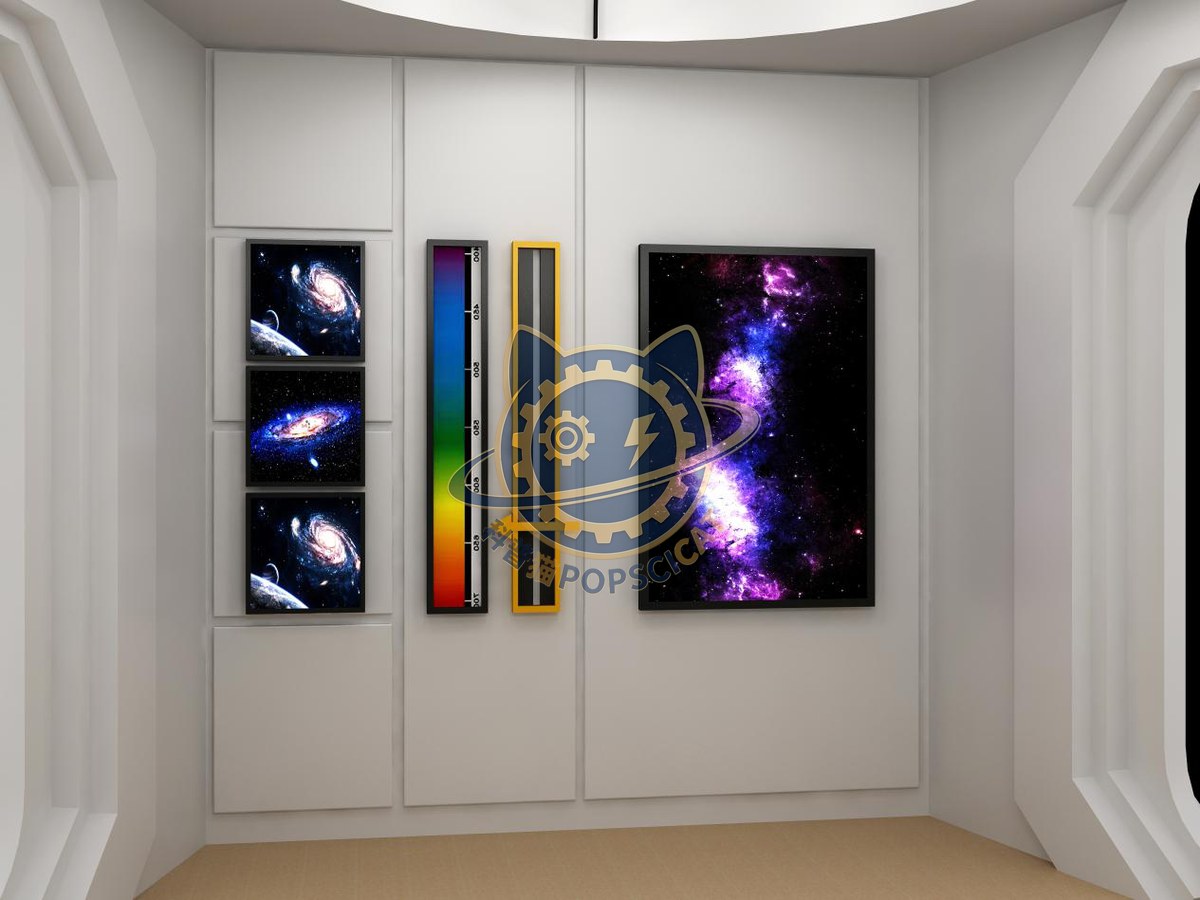
The exhibit you see below is called "Electromagnetic Spectrum." Students can move the slider up and down to the wavelength range they want to learn about and watch the video on the right-hand screen for an introduction to the spectrum image of that wavelength range and its applications. Electromagnetic waves consist of changing electric and magnetic fields and are an important means by which energy propagates around us. The electromagnetic spectrum can be broadly divided into radio waves, microwaves, infrared radiation, visible light, ultraviolet radiation, X-rays, and gamma rays, based on differences in wavelength, frequency, and wave source. Electromagnetic waves are ubiquitous in our daily lives. Radios generate sound waves by receiving radio waves and converting them into mechanical vibrations in the speaker. Microwave ovens use microwaves to cause the molecules in food to move rapidly, generating heat and cooking the food. Airport security scanners use the penetrating power of X-rays to perform security checks on passengers' luggage. The Gamma Knife precisely focuses gamma rays on the affected area and delivers a high dose of radiation in a short period of time to kill cancer cells. Visitors can define the wavelength of the spectrum by moving the slider up and down. The changes in the image on the large screen can show the effects at this wavelength. It is built for unsupervised public use: surfaces are robust and wipe-clean, there are no loose parts, and the interface works without instruction, so a child of about six can operate it on a busy floor.

02 / How visitors use it

Interaction type: Electromechanical, hands-on. The unit is designed for unsupervised public use: controls are recessed or shielded, moving parts are enclosed, and the interface is operable by a child of about six with no instruction. Where a screen is used, the language can be switched without changing the hardware, and the content can be replaced on site.

03 / Built for a public floor

Every unit leaves the factory after a running test: mechanisms cycled, electronics burned in, edges dressed, fixings torqued and marked. Wear parts — bearings, sliders, lamps, belts, touch panels — are modular and listed on the spare-part sheet, so a venue technician can replace them without returning the exhibit. Crating is plywood with foam blocking; the loading plan and packing list travel with the shipment.

Same category

More in Basic Science

Other models from the Basic Science line, all held to the same specification and the same control package.

Start a project

Send us your exhibit list.
We will come back with a price.

Attach a theme outline, a floor plan, or nothing at all — a photo of the space is enough to start. Quotations are issued against a real exhibit list, not per-square-metre guesses.

Prefer to see the floor before you commit? Factory visits and third-party inspections are welcome.

WhatsApp QR code — scan to chat with Shanghai Inertia
WhatsAppScan to chat
WeChat QR code — scan to message us
WeChatScan to add us