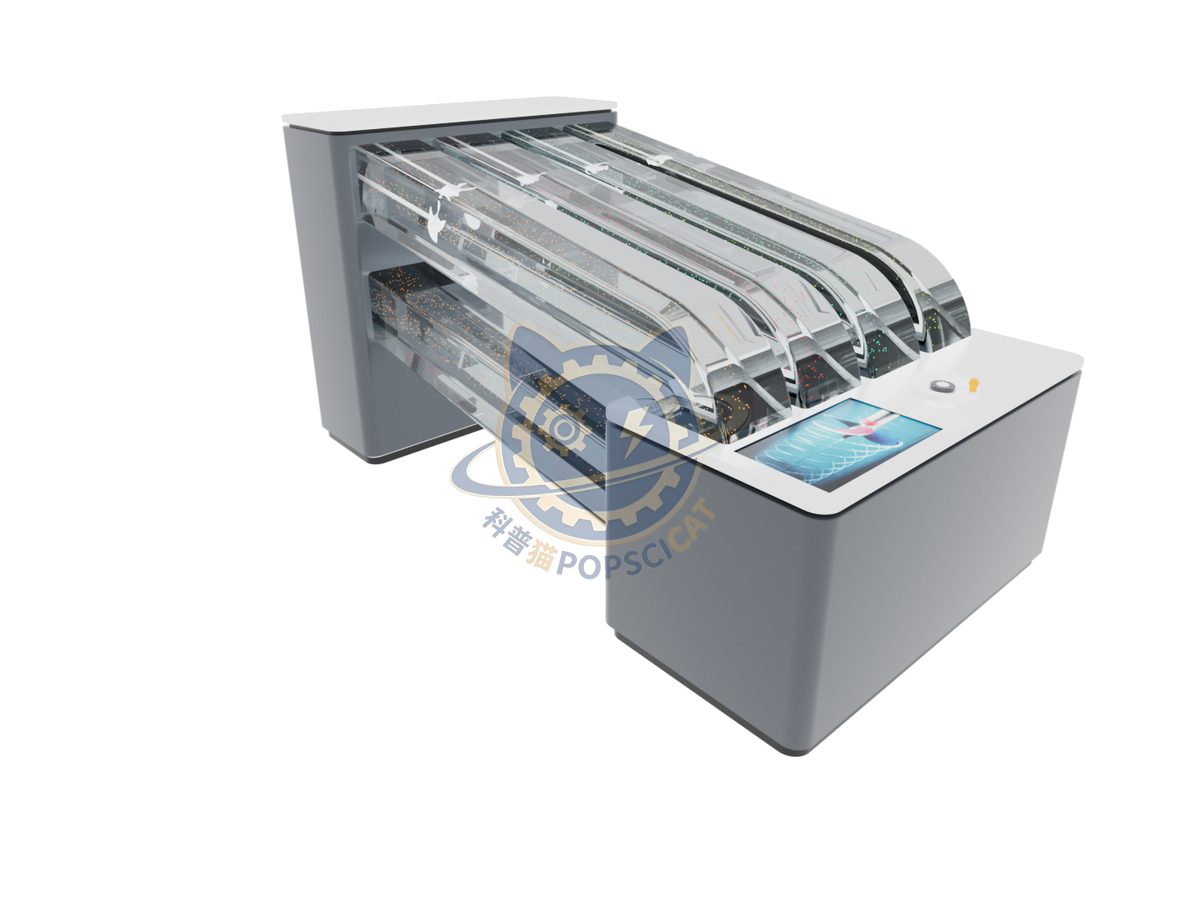
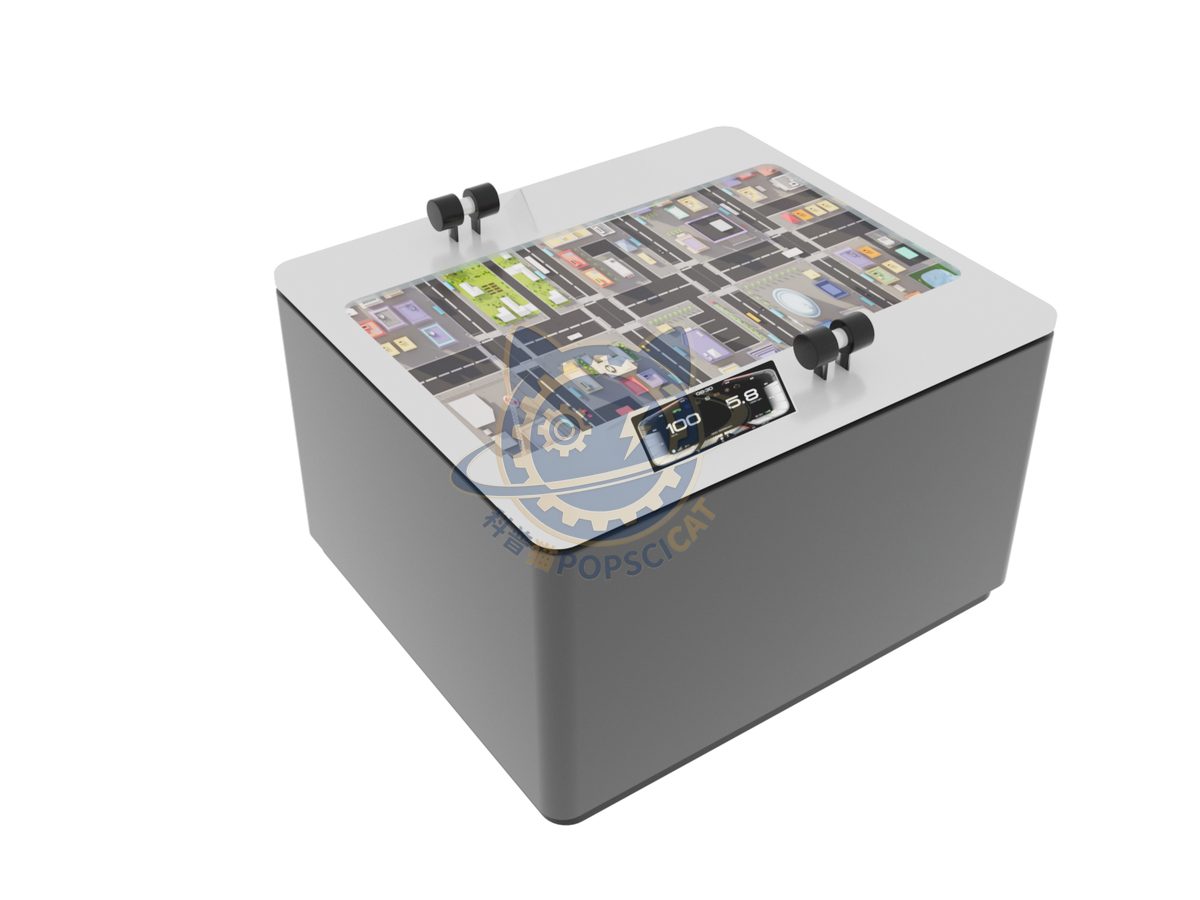
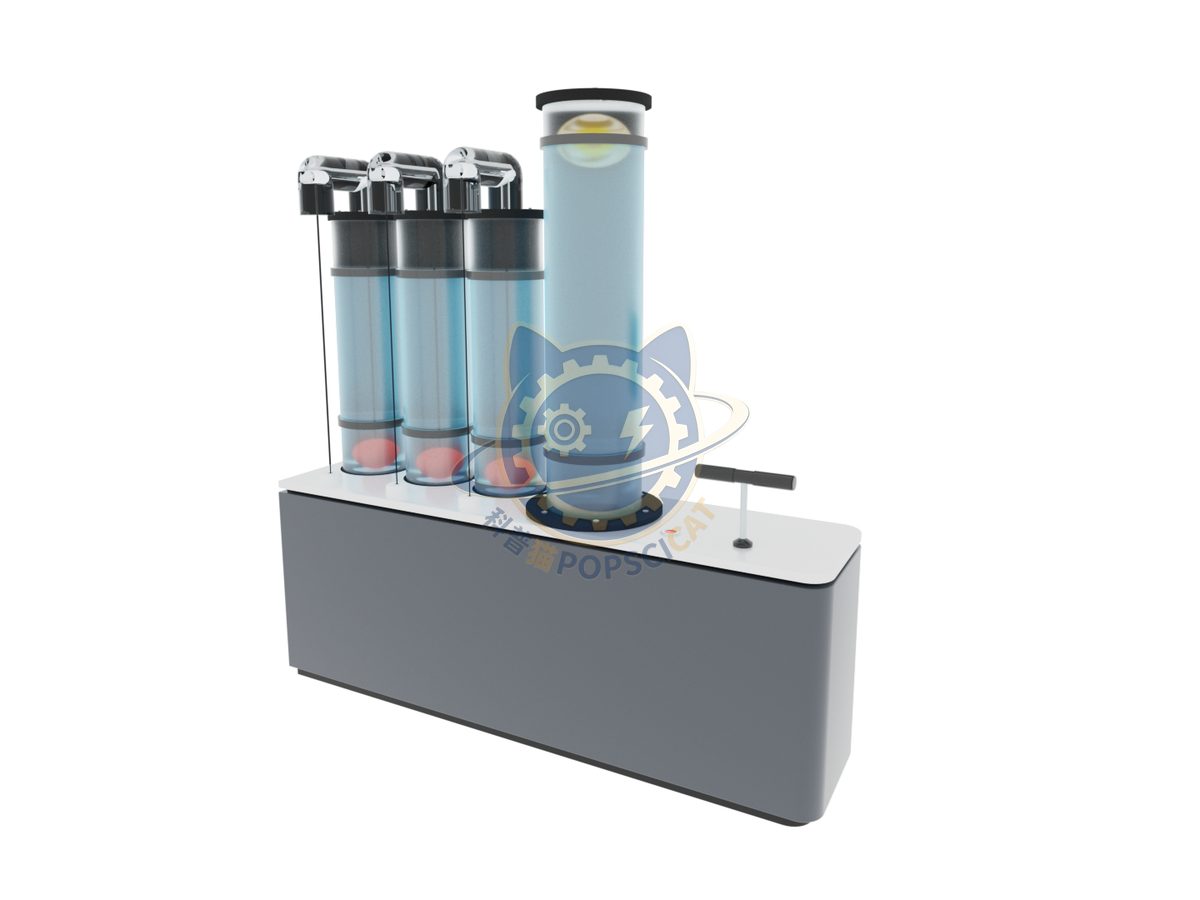
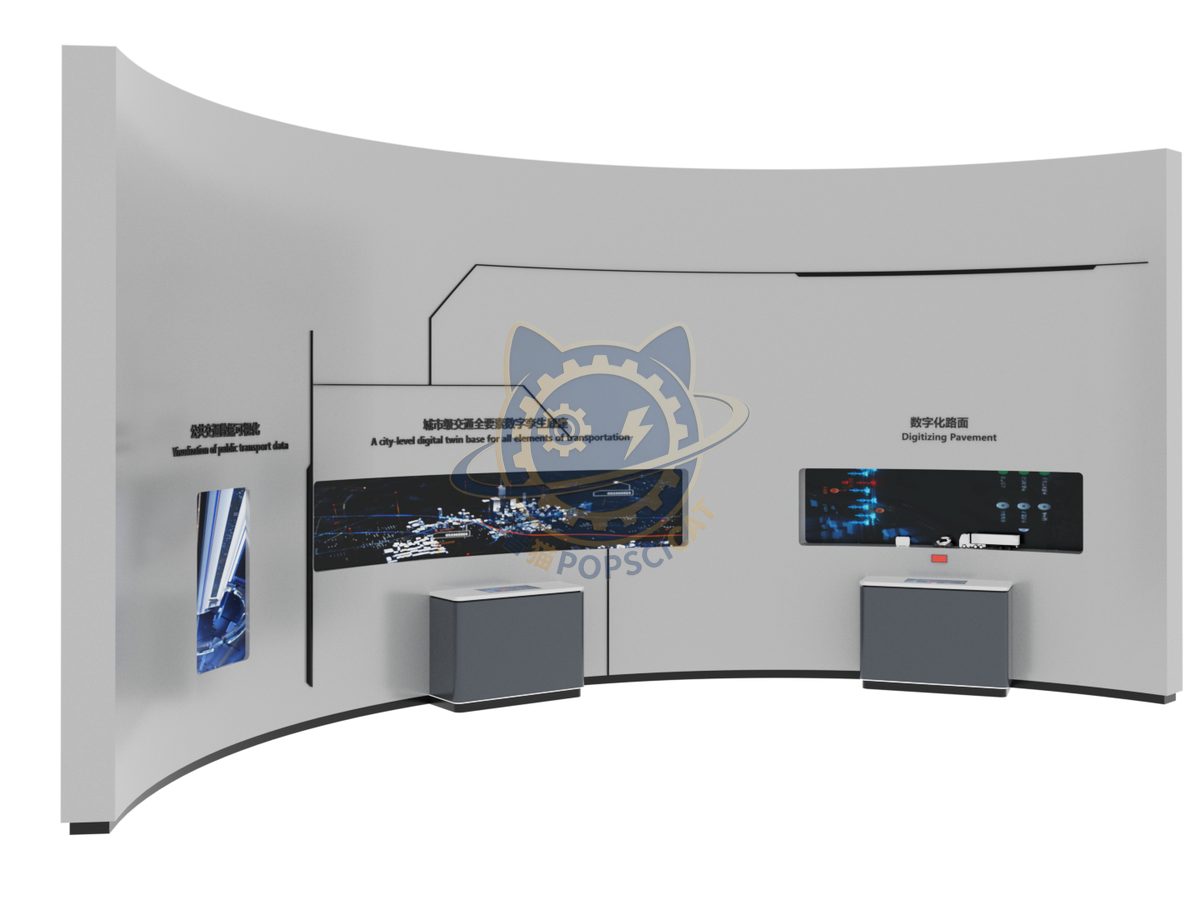
I. Purpose of the Exhibit To transform common real-life traffic problems into model displays and interactive experiences. By controlling the models, visitors can easily understand the causes of traffic congestion and explore ways to resolve it. II. Scientific Principles Traffic congestion, also known as traffic jams, traffic gridlock, or simply congestion, refers to a phenomenon where a large number of vehicles are crowded together and moving at slow speeds. It typically occurs during holidays or peak commuting hours. This situation often occurs in major metropolitan areas around the world, on highways connecting two cities, and in regions with high car usage (such as the United States). In addition, roads that are prone to traffic jams are often referred to as traffic bottlenecks. The principles applied in this exhibit include reducing the frictional force between objects and the movement of gas molecules, among others. Frictional force: The force that impedes the relative motion (or tendency of relative motion) of objects is called frictional force. The direction of the frictional force is opposite to the direction of the relative motion (or relative motion tendency) of the object. The main methods to reduce frictional force are: 1. Reduce pressure; 2. Make the object and the contact surface smooth; 3. Separate the object from the contact surface; 4. Change sliding to rolling, etc. Every gas molecule is in constant motion. A large number of gas molecules collide frequently, causing each gas molecule to move in a chaotic manner. The distance between gas molecules is large, approximately 10 times the diameter of the molecules. Therefore, except when they collide with each other or with the walls of the container, gas molecules are not subjected to any forces and move freely in space. Gases can fill any space they can reach and do not have a definite volume or shape. On the surface of the "Roads and Traffic" exhibit, there are densely distributed small holes, each of which emits a uniform stream of air, forming a layer of air film on the platform surface. Moving objects are "supported" by the air film and do not come into contact with the platform. Therefore, when they move along the platform surface in two dimensions, there is almost no frictional force. Therefore, the EVA disc moves along a specific path under the influence of the airflow. Air-bearing platforms are widely used in many fields, such as physics experiments, spacecraft attitude model simulation and control experiments, and air-bearing guideways. III. Functional Description (Technical Solution) The exhibit simulates the relationship between urban roads and traffic flow by placing foam discs on an air-bearing platform. It visually demonstrates the phenomenon of traffic congestion to the audience and prompts reflection. This exhibit mainly consists of road and vehicle models, with the vehicle models being propelled by fans. Under the influence of the fans, the road becomes a section that can drive the "vehicles" to move, realistically simulating traffic conditions. The audience presses the "Start" button to clear the road and places one or more foam discs (cars) on the same or different roads. In both narrow and wide roads, the size of the foam discs directly affects their smooth passage. When there are too many foam discs on the road or they are too close together, congestion is likely to occur, which is known as a "traffic jam." 4. Operating Instructions Press the "Start" button, place the "car" models from the collection tray onto the roads, and observe the driving behavior of the "cars" under different road conditions. It is built for unsupervised public use: surfaces are robust and wipe-clean, there are no loose parts, and the interface works without instruction, so a child of about six can operate it on a busy floor.